Heroes have always been viewed through the lenses of their era. Superman is no different.
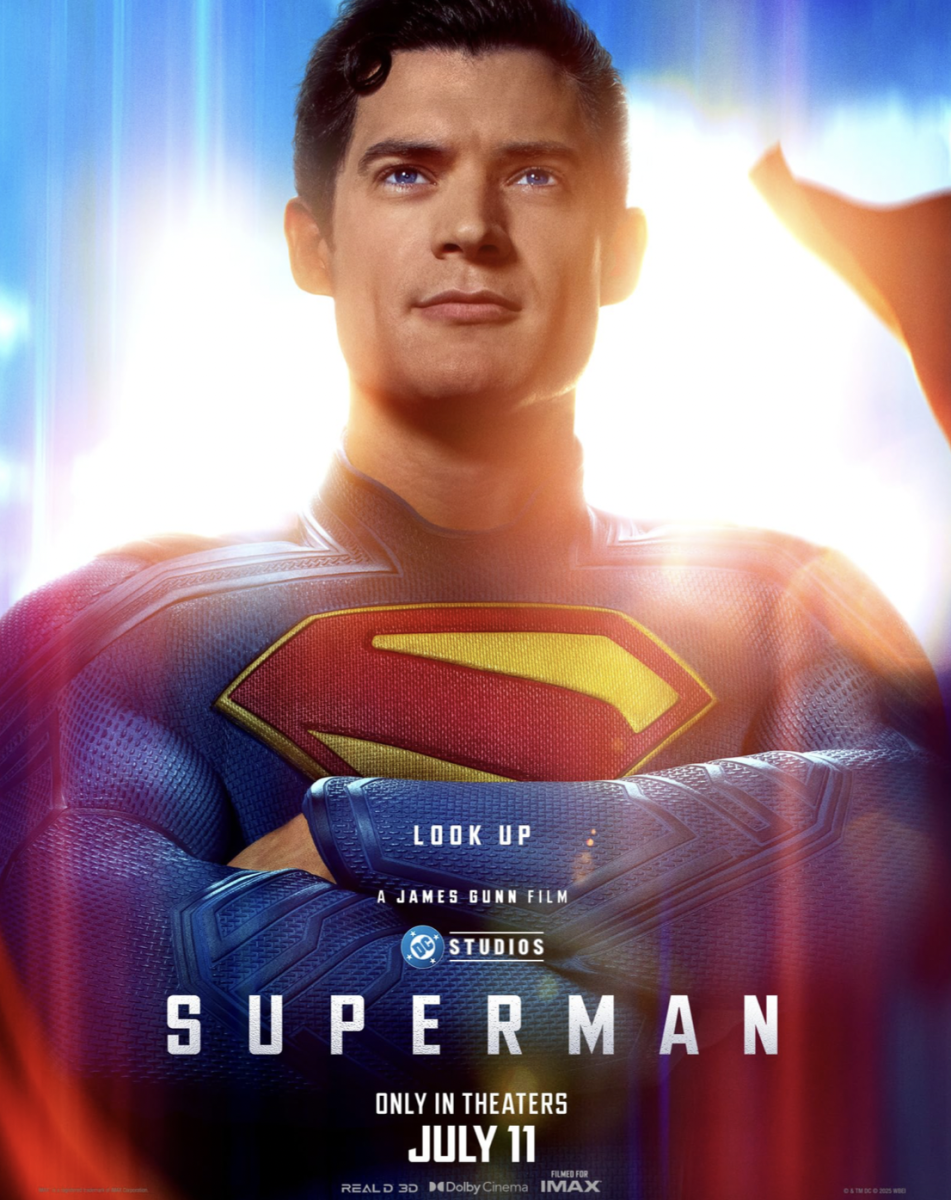
Director James Gunn’s adaptation of Superman, starring David Corenswet, reinvents the D.C. universe around the new superhero, with more projects to come. The story of Superman is of an “immigrant that came from other places and populated the country,” Gunn said, and one that characterizes Superman as above anything else, kind. But it seems that not even the Man of Steel can escape today’s political environment unscathed.
The film’s creative direction ignited a firestorm in pop culture, particularly among right-wing commentators. Fox News branded the movie “Superwoke,” likening the American hero to violent gang members of the international crime syndicate MS-13. Superman and Gunn were accused of pushing an ideology in the box office instead of emulating the hero’s authentic story.
Yet heroes have never been apolitical — especially Superman. This reaction exposes a profound irony at the heart of modern American culture. Superman’s true origins begin in 1938, when Jerry Siegel and Joe Shuster, the children of Jewish immigrants, created a hero they believed would bring hope to the world at a time when anti-Semitic tropes were perpetually present in the media. Kal-El, an immigrant to both the country and this Earth from the planet Krypton, would take on the identity of Clark Kent and become the embodiment of truth, justice, and the American way.
Superman reflects America’s broader struggle with identity in an increasingly polarized era, amplified by current tensions over the Israel-Palestine conflict. Despite no mention of the war in the movie, controversy arises as Superman tells the story of two distant countries, Boravia and Jarhanpur. At the onset of the plot, viewers are told that Superman has just stopped the Boravian invasion of Jarhanpur. Online reactions drew distinct parallels between American-backed, wealthy Boravia and Israeli Prime Minister Benjamin Netanyahu’s attacks on the Palestinian territories, funded by the U.S., comparing Boravia’s onslaught to the Gazan occupation. Yet, in the midst of countless worldwide wars — Russia’s, Afghanistan, even Iran — perhaps the mistake is jumping to arms to defend our dearly-held political beliefs. Gunn insisted that the film contains no direct allegory for the Middle East, restating that Superman was meant to embody kindness and justice for all.
In fact, Superman does not take political sides. Not interfering with diplomatic negotiations, Superman intervenes only when Boravian dictator Vasil Ghurkos’ military attacks escalate on the innocent Jarhanpurian populace. In the original comics of Superman, the Kryptonian ends a civil war in Boravia and reinstates the rightful ruler to power. While the ending of the film does not end so favorably for Gunn’s version of Ghurkos — Hawkgirl drops him off a cliff to his untimely death — Superman himself does not intervene with the affairs of state. Instead, he rises to the defense of civilians, no matter their race or nationality.
American heroes in both comics and the television screen have always portrayed the national values of the times. Captain America, for example, was created as a direct opposition to Nazism and the chaos of Europe, mirroring the rise of the United States as a global superpower, punching Hitler in the face. Wonder Woman was a feminist symbol entering into the boys’ club of heroics, and the X-Men served as civil rights commentary. And in more modern times, Black Panther served as an embrace of Black culture as canon. So while Superman’s heroics in Jarhanpur may not be a political message to the leaders of today, he is undeniably a political figure.
Gunn himself has emphasized that his film’s central themes are hope and kindness, hardly radical concepts. Yet even these traditionally wholesome values have become contested terrain in contemporary America. The director’s vision focuses on Clark Kent’s humanity rather than his godlike powers, exploring how an alien outsider might navigate a world that often seems to have lost faith in its own foundational ideals. In holding up a mirror to American society, Gunn has created a film that succeeds both as entertainment and as cultural commentary, proving that sometimes the most powerful stories are the ones that make us most uncomfortable about ourselves. Superman is the hero that our era deserves.